Room for Four: Inside the Tiny London Pubs Where the Beer Is Cold and the Gossip Is Warm
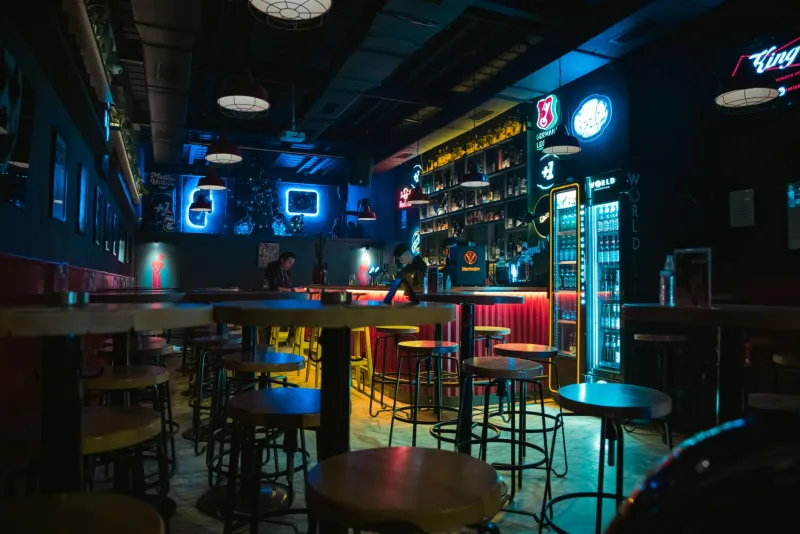
There's a moment, about three steps into certain London pubs, when you realise you've already found the toilets, the bar and the beer garden — because they're all the same room. The door opens, the regulars look up, and you've effectively joined the conversation whether you meant to or not.
Welcome to London's micro-pubs: drinking establishments so small that the landlord can pass you a pint without leaving the till, and where 'grabbing a quiet corner' is a physical impossibility. In a city obsessed with scale, these are the pubs that have decided character beats square footage — and they're thriving.
The Shop Doorway That Became a Pub
Tucked into what was once a parade of ordinary retail units, a handful of London's smallest bars occupy premises you'd walk past a hundred times without a second glance. One former dry cleaner's near a railway arch in south London now seats precisely nine people. Another, in the east, is quite literally the width of a shop doorway — a sliver of a bar with a couple of stools, a rail of hanging glasses and a landlord who remembers exactly how you take your stout.
The economics are simple enough: small premises, small overheads, small risk. But the appeal runs deeper than rent. In a room this size, there's nowhere to hide, and that turns out to be the whole point. You don't scroll your phone in a five-seat pub. You talk to the person next to you, because they're about four inches away.
Shipping Containers and Railway Arches
Not all micro-pubs started life as shops. Some of the most interesting are built rather than found — converted shipping containers plonked onto disused patches of land, taprooms carved out of single railway arches, and microbreweries that opened a tiny taproom because the beer simply couldn't wait for someone else to pour it.
There's something gloriously unpretentious about drinking in a converted container. The acoustics are terrible. The condensation fogs the little windows when it's cold. And because the whole operation might hold fifteen people on a good night, the 'regulars' section of the pub is basically everyone who's ever been twice.
The taproom scene deserves special mention here. What began as breweries slinging pints straight from the tank has matured into its own drinking culture: communal benches, dogs underfoot, board games on the shelf, and a strict unwritten rule that whoever's nearest the bar does the next round. It's the pub, distilled to its essence — a bit like the beer, really.
The Landlord Who Knows Too Much
Every good micro-pub has a figurehead, and they tend to be memorable. These aren't managers rotating through a chain's rota; they're owner-operators who chose a tiny room and a short menu over expansion. Ask what's on and you'll often get a tour of three casks and a couple of kegs, delivered with opinions.
The smallness shapes everything. A micro-pub landlord isn't a background presence — they're the moderator, the matchmaker, the person who gently steers a lively debate about football back to safer ground. In a room of a dozen people, the atmosphere is the landlord's responsibility in a way it simply isn't in a 300-capacity palace.
And they know things. Which regular is getting married. Which brewery is about to do something interesting. Which nearby curry house does the best post-pint bhaji. This intelligence network doesn't scale, which is precisely why it works.
Second Front Rooms
Talk to the regulars and a phrase comes up again and again: 'my local', said with real conviction, by people whose actual front door is three miles away.
One regular I met — a retired teacher who travels across two tube zones for her Thursday pint — put it plainly: "I could drink nearer home. But nearer home doesn't know my name." In an age when so much of city life is anonymous, a bar that seats eight people has an unfair advantage: it cannot be anonymous. Show up twice and you're a face. Show up five times and someone's saving you a stool.
There's a rhythm to these places, too. The after-work crowd that empties by eight. The Saturday afternoon drift of dog walkers and cyclists. The Sunday quiz that technically allows six people per team but has never once been enforced. Small pubs run on rhythm the way big pubs run on turnover.
How to Find Them
The trouble with London's tiniest pubs is that they're, well, tiny — and easy to miss. A few tips from the people who know:
- Follow the breweries. Small breweries almost always have a small taproom, usually open Thursday to Sunday, often in unexpected corners of industrial estates.
- Look for the handwritten A-board. Micro-pubs don't have marketing budgets; they have chalk.
- Go early or go off-peak. If there are only ten seats, arriving at 7pm on a Friday is a commitment, not a plan.
- Cash sometimes helps. The odd tiny boozer still runs on card machines of dubious temperament. It's part of the charm. Mostly.
Small Room, Big Idea
London has spent decades knocking things down and building them bigger. Micro-pubs push the other way — proof that a pub doesn't need a function room, a beer garden and a gastropub menu to matter. It needs good beer, a warm room and someone behind the bar who'll ask how your mum's doing.
So next time you're torn between the sprawling riverside drinking warehouse and the door you can barely find, take the small one. Squeeze in. Say hello to the person next to you — they're going to hear your conversation anyway.