The Ten-Year Wait for a Patch of Earth: Inside London's Allotment Obsession
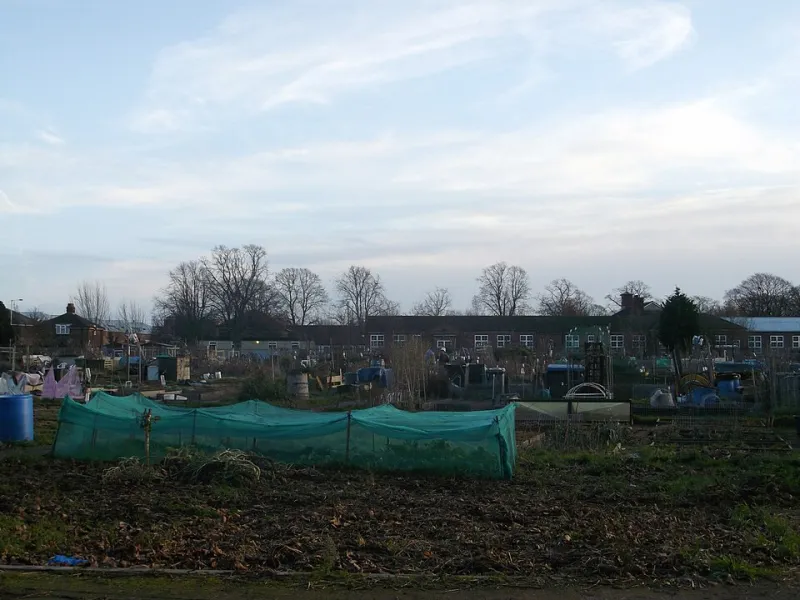
Photo: David Anstiss , CC BY-SA 2.0, via Wikimedia Commons
The email arrives eventually, usually on a Tuesday. It says something like: thank you for your application, we regret that there is currently no plot available, your position on the waiting list is 63. Then it says nothing else for four years.
Ask anyone who has applied for an allotment in London and you will hear a version of this. A three-year wait that quietly became six. A plot offered in a far corner of a site in Edmonton, then withdrawn because the previous tenant changed their mind about giving up. A man in Tottenham who put his name down when his daughter started primary school; she is doing her GCSEs now and he still hasn't turned a sod.
The List That Never Moves
The capital has somewhere north of 20,000 allotment plots, spread across hundreds of sites — council-managed, self-managed, church land, hospital land, the odd strip behind a reservoir in Tolworth that nobody outside the borough could point to on a map. And almost every one of those sites has a list.
Borough websites are admirably honest about it. Many quote five to ten years. A few quote longer. Plenty don't quote at all, which is its own kind of answer. Demand spiked hard during the pandemic, when everyone suddenly wanted a bit of dirt and a reason to leave the flat, and — this is the part people forget — it never came back down. The plots got taken. The lists got longer. The habit stuck.
What You're Actually Queuing For
Here's the thing outsiders get wrong. Nobody is waiting a decade for the carrots.
A ten-rod plot costs somewhere between £30 and £100 a year depending on the borough, plus a bit for water. Even with the cost of a shed, a fork and the annual ritual humiliation of the slug pellets, it is the cheapest square footage in London by an absurd margin. What people are queuing for is space that nobody can take off them on a whim, and a reason to be outside that isn't a gym membership.
Sit on a bench at a site in Hanwell on a Saturday morning and you'll see what the waiting list is really protecting. A retired nurse growing more runner beans than any household could eat. A dad teaching a seven-year-old how to hold a trowel. Two neighbours who have been arguing about the boundary hedge since 2019 and would be lost without each other. The allotment is one of the last places in the city where you can be alone in public without buying anything.
The Politics of the Plot
Allotments sit on land, and land in London is worth a great deal more as flats. Sites get nibbled. A corner sold here, a water main diverted there, a "temporary" allotment that has been temporary since the 1970s and would very much like to stop being temporary.
Statutory sites come with protections: sell one off and the council is supposed to provide a replacement. Self-managed sites rely instead on the goodwill of a committee and the vigilance of people who know exactly how many planning notices have gone up on the gate. If you want to understand a borough's priorities in five minutes, look at how tidy its allotment path is and how often the skip arrives.
There's an equity question too, and it's an uncomfortable one. A decade-long list rewards the patient and the settled. It favours people who know they'll still be in the same postcode in 2035. It quietly filters out anyone who moves every couple of years for work or rent, which is a large and growing share of Londoners.
How to Jump the Queue (Legitimately)
You can't bribe the site rep, though people try. You can, however, be smarter than the person who only rang their own council.
- Apply to more than one site. Lists vary wildly between neighbouring sites because nobody actually checks. A site half a mile away may have a fraction of the wait.
- Look for self-managed sites. Many run their own lists, often shorter ones, and are much more likely to offer you a half plot to start.
- Ask about half plots and starter beds. Ten rods is a lot. A five-rod plot often becomes available years sooner, and is honestly enough for most people's ambitions.
- Go where the growing is happening. Community gardens, church land, school projects, housing estate growing spaces and "meanwhile" plots on development land all operate outside the official queue.
- Turn up. Show your face at the site's open day or work morning. Committees remember the person who helped clear the pond.
Why It Still Matters
There is a version of London where every spare acre becomes flats with a gym and a concierge, and the growing happens somewhere off in a field in Kent. It would be more efficient. It would also be worse.
Because the waiting list isn't a failure of the allotment system. It's a message about what people actually want from the city — soil under a fingernail, a neighbour to argue with about a hedge, a Saturday that produces something you can eat. The council can't build that. It can only refuse to sell the land.
If you're on a list, stay on it. Send the email. Wait. And in the meantime, find a site near you and go and look over the fence — every one of them has a gate, and most of them have someone behind it happy to talk about compost for an hour.