The Room Goes Dark, the Room Comes Alive: Why London's Small Screens Are Winning
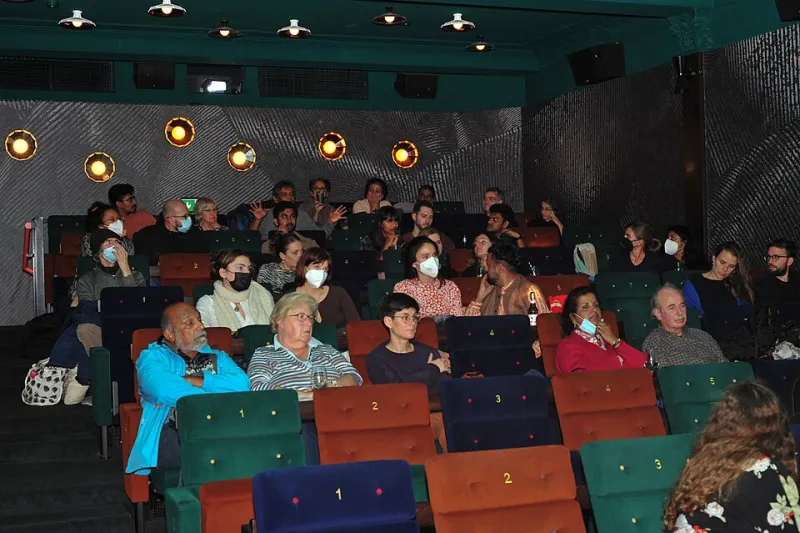
Photo: Clemens Anderlitschka, CC BY-SA 2.0, via Wikimedia Commons
There is a particular sound in an independent cinema about thirty seconds before a film starts. It isn't silence. It's the low rumble of ninety people settling — coats coming off, drinks being wedged into armrests, someone whispering about whether the print will hold. Then the lights dip and the rumble stops and the room becomes a single organism for two hours.
You don't get that on your sofa. You don't get it in a multiplex either, where you're one of eleven people in a 300-seat auditorium watching a trailer for a streaming service.
The Case Against the Sofa
The accepted wisdom is that small cinemas are finished — that streaming won, that nobody under thirty will sit through anything without a pause button, that the only viable model is a big screen, a bigger car park and a licensing deal on nachos.
And yet. Book a Friday night at a 90-seat independent in Hackney or East Finchley or Kensal Rise and see how you feel about that theory. Sold out. Again. A 35mm print of something from 1974, introduced by a programmer with a clipboard, followed by a Q&A with a cinematographer who has to be persuaded to stop talking.
What the small cinemas worked out, faster than anyone, is that they are not competing with streaming. They are competing with everything else you could do on a Thursday night with other people in it.
Who's Actually in the Booth
There's a person up there, and that's the whole point.
The projectionist is the most romanticised job in the building and, right now, one of the most precarious. In the multiplex era, projection became a hard drive and a schedule pushed from head office, and the job quietly disappeared — which is why the ones who remain are treated like folk heroes by the people who book the prints.
Because showing a film on celluloid is not a button press. It's checking the reel, checking the sprockets, watching the frame, knowing exactly what to do when something goes wrong at 47 minutes. A cinema that can still run a print can programme things nobody else can get. That gives a small room a reason to exist that no amount of reclining seats can match.
The Repertory Bet
It is, on paper, a ridiculous business model: show films that everyone has already seen, that are streaming for free, that half the audience owns on DVD.
In practice it's the opposite of ridiculous. A repertory screening isn't selling plot. It's selling the experience of seeing it in a room with people who care, on a night that exists only once. The BFI's seasons, the Rio's late-night programming, the Phoenix's matinees, the Lexi's neighbourhood feel, the Garden's absurdly well-chosen new-and-old mix — these aren't nostalgia operations. They're the reason those buildings are still standing.
And the audience isn't who the industry thinks it is. Under-30s turn up for the 35mm. Parent-and-baby screenings sell out weeks ahead. Subtitled seasons fill seats in boroughs where a third of households speak another language at home. Dementia-friendly screenings do quiet, extraordinary work. Somebody buy those programmers a drink.
The Economics of a 90-Seat Room
Let's be honest about the maths, because it's brutal. Ninety seats at £12 is £1,080 a screening. Take off the distributor's share, the heating, the staff, the electricity that has roughly doubled, and the print transport, and you are looking at a margin that would make a greengrocer weep.
Which is why the interesting independents have stopped pretending to be passive. They run memberships. They crowdfund repairs. They sell the bar hard (and their bars are, increasingly, better than their neighbours'). They take over empty shop units for a season. They run quiz nights, record fairs, film clubs, and seasons co-curated with the people who live on the street. Peckhamplex keeps tickets famously low because it owns its building and refuses to be talked out of it.
None of this is a business plan in the MBA sense. It's closer to a survival strategy, and the currency is loyalty.
The Public Room Argument
Here's the actual opinion, and you can take it or leave it: London's independent cinemas have quietly become some of the most useful public rooms in the city.
The pub is expensive and noisy and increasingly designed for people who shout. The library is wonderful and closing. The community hall is booked for Zumba. Meanwhile a small cinema will sell you a seat for two hours of company, for the price of a large glass of wine, in a dark warm room where nobody looks at you and nobody expects you to talk — and where, crucially, you're in it together with ninety strangers.
That's not a small thing in a city that keeps finding new ways to be lonely. It's the last remaining place where paying attention is the whole social contract.
What Would Kill It
Two things. Rent, which we've covered. And the slow erosion of the thing that makes the room worth entering: programming that takes a risk.
The moment a small cinema starts booking only what the algorithm would book, it becomes a very expensive television. The whole advantage — the repertory print, the strange double bill, the documentary nobody's heard of, the Q&A that goes on too long — depends on a programmer being allowed to be wrong sometimes. Give them room to be wrong. That's where the good nights come from.
So: pick one near you. Not the big one in the West End. The small one with the wonky seats and the hand-painted board. Go on a Tuesday. Buy a drink. Sit down. Wait for that rumble, thirty seconds before the lights go down.
It's still there. For now. Which is exactly why you should go.