Walls With Something to Say: How London's Street Artists Claimed the City's Forgotten Corners
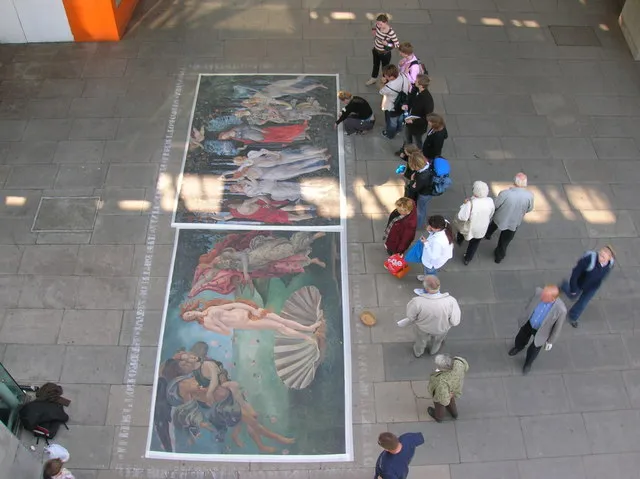
Photo: Alby, CC BY-SA 2.0, via Wikimedia Commons
There's a tunnel just off the Old Kent Road that most Londoners have never noticed. It smells faintly of damp concrete, it's not on any tourist map, and on a Tuesday afternoon it's entirely empty except for a woman on a stepladder carefully applying a six-metre mural of a red telephone box being swallowed by a wave. Her name is Priya, she's been working on this particular wall for three days, and she has written permission from Southwark Council to be here.
That last detail is what separates 2024's London street art scene from the one that existed twenty years ago. The conversation around who owns public space — and who gets to decorate it — has shifted dramatically. And the city looks all the better for it.
From Tags to Tapestries
Street art in London has never really gone away. Banksy put Shoreditch on the international art map in the early 2000s, and the East End has been a kind of open-air gallery ever since. But the movement that's taking shape now feels different in character and ambition.
The newer wave isn't just about visibility. Artists are choosing sites deliberately — spaces that have been overlooked, underinvested, or written off entirely. Railway arches, pedestrian subways, the sides of decommissioned industrial units. These aren't canvases chosen for maximum footfall. They're chosen because the artists actually care about what happens to them.
"There's a real conversation happening between artists and the spaces themselves," says Jonah Osei-Mensah, who runs a small collective out of a studio in Peckham. "You don't just slap something on a wall and walk away anymore. You're thinking about the community that walks past that wall every single day. That changes what you make."
Jonah's collective has completed seven murals across south London in the past eighteen months, every one of them with formal backing from either the local authority or the building's owner. The work ranges from abstract geometric patterns to photorealistic portraits of local figures — a Jamaican grandmother who's run a market stall in Brixton for forty years, a teenage footballer from a Camberwell estate who died too young.
The Councils Quietly Getting On Board
It would be easy to frame this as a battle between bureaucracy and creativity, but the reality is considerably more nuanced. Several London boroughs have started actively commissioning street art as part of wider regeneration schemes, recognising that a well-executed mural can do more for a neglected area than a new bench and some hanging baskets.
Hackney has been particularly progressive. The council's public art programme has funded over thirty permanent works in the past five years, many of them in areas that were struggling with anti-social behaviour and low footfall. The thinking is straightforward: a space that feels cared for tends to be treated with more care.
Waltham Forest followed suit after its stint as London Borough of Culture, using the momentum from that year to establish a permanent programme connecting emerging artists with available walls across the borough. The results are scattered across Walthamstow and Leyton in a way that rewards proper exploration — you genuinely stumble across things you weren't expecting.
Not everyone is convinced, of course. Critics argue that officially sanctioned street art loses something essential in the process — that the transgressive quality is precisely the point, and that a mural with a planning reference number attached is really just a very large poster. It's a fair challenge. But spend an afternoon in Bermondsey's railway arch district and it's hard to feel too precious about the paperwork.
Where to Find It
If you're serious about exploring what's happening right now, a few areas deserve your attention.
Leake Street, SE1 — Banksy's original tunnel under Waterloo station remains the most famous legal graffiti space in the country. The walls turn over constantly, which means it looks completely different every time you visit. Go early on a weekday morning if you want it to yourself.
Bermondsey's railway arches — The stretch between London Bridge and South Bermondsey has become something of an unofficial gallery district. The arches themselves house everything from breweries to car mechanics, and the exteriors have attracted some genuinely ambitious work.
Walthamstow Village and the surrounding streets — The Borough of Culture legacy is still very visible here. Pick up a rough mental map from the local library and give yourself a couple of hours.
Peckham Levels and the surrounding area — The multi-storey car park turned cultural venue has acted as a magnet for creative activity across the whole postcode. The streets immediately around it are worth a wander.
A Movement, Not a Moment
What makes the current scene feel genuinely significant is its staying power. Street art has had its trendy moments before — usually followed by rapid commercialisation and a collective loss of interest. What's different now is the infrastructure that's built up around it: artist collectives with proper funding applications, councils with dedicated public art officers, gallery owners who bridge the gap between wall-based work and the traditional art market.
Back in that tunnel off the Old Kent Road, Priya is packing up her brushes as the light starts to fade. The mural isn't finished — she'll be back tomorrow — but already it's transformed the space in a way that's difficult to articulate. It just feels less forgotten.
"People stop," she says, pulling on her jacket. "That's the whole thing, really. They stop and they look. In London, that's actually quite hard to make happen."
She's not wrong.