London's Next Chapter: The Neighbourhoods You Should Be Paying Attention to Right Now
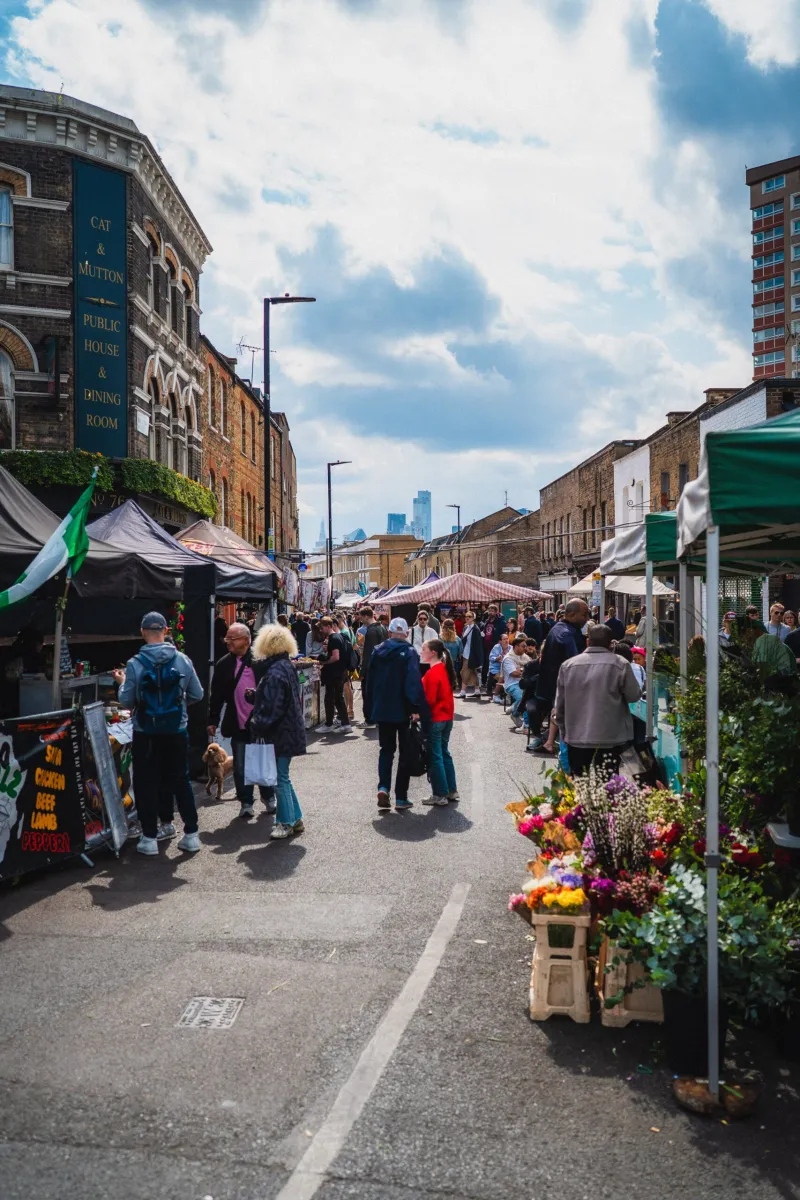
Photo: London emerging neighbourhood street market independent shops community East London, via www.solosophie.com
Every few years, London reshuffles its deck. An area that was overlooked becomes interesting, then desirable, then — if you blink — prohibitively expensive and full of coffee shops that charge four quid for an oat flat white. It's a familiar cycle, and it moves faster than most people expect.
The trick is catching a neighbourhood in that sweet spot: after the interesting people have arrived, but before the interesting people have been priced out by the people who followed them. In 2025, there are a handful of areas across the capital that are sitting in exactly that window. Here's where to look.
Leyton, East London: The Quiet Achiever
Leyton has been 'nearly there' for a while, but something shifted in the last eighteen months or so. The arrival of a clutch of genuinely good independent businesses — a natural wine bar on Francis Road, a brilliant Turkish-influenced bakery, a record shop that doubles as a community space — has given the area a coherent identity it previously lacked.
Rents are still significantly lower than neighbouring Walthamstow, which has itself become almost unaffordable for the creatives who made it appealing in the first place. Many of them are moving south along the Overground, and they're bringing their habits and their businesses with them.
Francis Road is the spine of the emerging scene — pedestrianised, lined with independent shops, and increasingly busy on weekend mornings with the kind of foot traffic that makes landlords take notice. The Overground connection to Stratford and Hackney makes it genuinely practical for commuters, which matters more than aesthetics when people are making decisions about where to live.
"We moved here from Hackney two years ago and we haven't looked back," says Priya, who runs a ceramics studio from a railway arch just off Lea Bridge Road. "The community is proper. People actually know each other's names. You don't get that once somewhere gets too popular."
Woolwich, South East London: The Crossrail Effect
The Elizabeth line changed the calculus for Woolwich in ways that are still playing out. Suddenly, a neighbourhood that felt geographically awkward — south of the river, east of Greenwich, not quite anywhere — found itself thirty-odd minutes from the West End. The journey times shifted. The perception is slowly following.
Woolwich Arsenal's historic buildings and the open space of Woolwich Common give the area genuine bones — this isn't a place being asked to conjure character from scratch. The market on Beresford Square has been a community anchor for generations, and the ongoing regeneration around the Arsenal site is bringing new housing, workspaces, and cultural venues without (so far) entirely obliterating what made the area interesting.
The food scene is one of the most genuinely diverse in London — West African restaurants, Sri Lankan takeaways, Vietnamese grocers — and it reflects a community that's been here for decades rather than one assembled by a property developer's vision of 'vibrant'. There's a difference, and you can feel it.
Property prices remain relatively accessible by London standards, though the trajectory since the Elizabeth line opened has been sharply upward. The window is narrowing.
Walthamstow Village, North East London: Depth Over Flash
Walthamstow as a whole has been on the radar for years, but the Village — the cluster of streets around the ancient church and the oldest surviving domestic building in London — operates at a different frequency to the busier end of the High Street.
It's quieter, more residential, and home to a community that takes genuine pride in the neighbourhood's history. The independent pub scene is strong, the farmers' market draws serious food people, and the area has developed a reputation for the kind of low-key, high-quality eating and drinking that doesn't need to advertise itself.
What's interesting in 2025 is the second wave of businesses that are opening in the streets adjacent to the Village proper — taking advantage of slightly lower rents while benefiting from the established footfall. A new natural wine shop, a bookshop with a decent events programme, a supper club operating from a converted Victorian schoolroom. The area is deepening rather than simply expanding.
Peckham Rye vs Nunhead: The Quiet Side of SE15
Peckham itself is now firmly established — Frank's rooftop bar, Peckham Levels, the Bussey Building. The conversation has moved. The action is shifting along the railway line towards Nunhead, and down towards the quieter streets around Peckham Rye park.
Nunhead feels like Peckham did a decade ago: a functioning high street with proper butchers and hardware shops still in place, a growing number of independent cafés and restaurants, and housing stock that offers genuine value relative to neighbouring areas. The cemetery — one of the great Victorian garden cemeteries, genuinely beautiful and dramatically undervisited — gives the area a green lung and a sense of history that newer developments can't manufacture.
Several artists and makers priced out of Peckham and Camberwell have settled here, and the community noticeboard outside the local pub reads like a creative industries directory. The tipping point feels close.
Tottenham Hale, North London: Regeneration Done Differently
Tottenham has had a complicated relationship with regeneration — the area's history makes that an understatement. But around Tottenham Hale specifically, something is developing that feels less imposed and more organic than many comparable projects.
The Hale Village development brought new residents, and with them, demand for local amenities that has been met by a mix of chains and independents. The Victoria line connection is one of the best in north London for central access. And the creative community that's established itself in the warehouses and arches around the area has started to generate the kind of cultural programming — small festivals, studio open days, pop-up markets — that builds identity.
"People write Tottenham off without coming here," says Marcus, who opened a community-focused café and events space near the Hale two years ago. "But the people who live here are incredible. The diversity, the history, the energy — it's all here. It just needs a bit more belief from outside."
What to Watch For
If you're trying to read London's neighbourhood movements before they become obvious, a few reliable signals tend to show up early:
- Independent coffee shops with good wifi. They follow the freelancers, who follow the affordable rents.
- Natural wine bars. An almost unfailing indicator that a particular demographic has arrived.
- Improved transport links. The Elizabeth line effect in Woolwich is a template. Watch what happens when Crossrail 2 eventually gets built.
- Artists and makers taking railway arches. When the arches fill up, the surrounding streets follow.
- Estate agents changing their area descriptions. When somewhere starts being marketed as 'moments from' somewhere more prestigious, the clock is ticking.
London's best quality is that it never stops. Just when you think you know where the energy is, it moves — down a side street, across a borough boundary, into somewhere you'd dismissed. The city is always writing its next chapter. These are some of the pages worth reading first.