Last Orders at the Louvre: How Londoners Are Reclaiming Their Museums After Dark
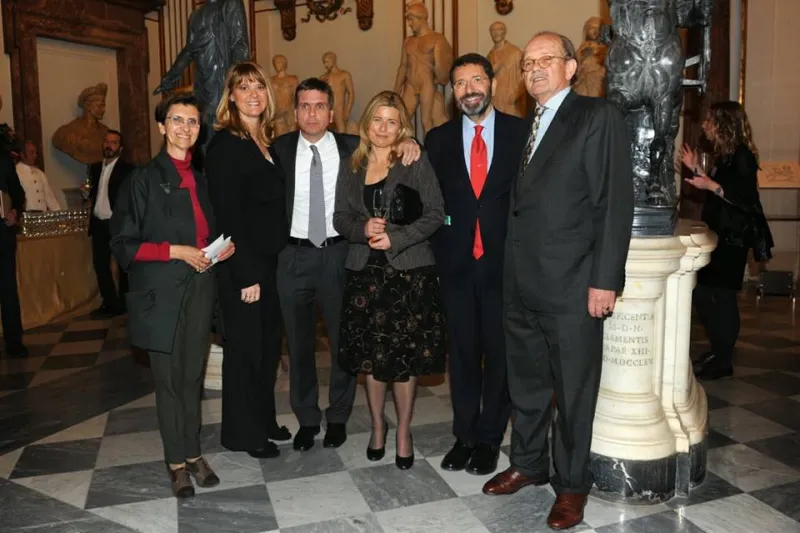
Photo: Dolcevia, CC BY-SA 4.0, via Wikimedia Commons
Somewhere between six and seven on a Friday evening, something shifts in London's cultural institutions. The last of the rucksack-wearing tourists filter out through the revolving doors. The café staff start stacking chairs. And then, gradually, a different crowd begins to arrive.
They're not here for the permanent collection. They're here for the wine.
Well — the wine, and the talks, and the DJ sets, and the speed-networking events disguised as exhibition openings, and the late-night screenings that somehow feel more intimate when you're watching them in a room full of Egyptian artefacts. London's after-hours museum scene has been quietly thriving for years, and if you're still treating these institutions as strictly daytime propositions, you're genuinely missing out.
The Shift That Changed Everything
The V&A's Friday Lates programme is probably the best-known example, and it's the one that set the template. Launched in the early 2000s, it transformed the museum's grand central courtyard into something that felt — on the right night — closer to a gallery-themed bar than a cultural institution. Free to enter, loosely themed around whatever the current major exhibition happened to be, and reliably packed with a crowd that skewed young, creative, and determinedly local.
The format has been imitated across the city ever since. The Natural History Museum does it. The Science Museum does it. Tate Modern does it with considerably more attitude. Somerset House has practically built its entire events calendar around the principle that the space works better after dark than it does during the day.
What's interesting is how differently each institution approaches the same basic idea.
Tate Modern: Where the Art Becomes the Backdrop
Tate Modern's late openings — the museum stays open until ten on Fridays and Saturdays — attract a crowd that's less interested in the Turbine Hall installation and more focused on the bar that's been set up in front of it. This sounds cynical, but it isn't really. The art functions differently when people aren't obligated to engage with it reverentially. Conversations happen in front of paintings. People linger in rooms not because they feel they should but because something caught their eye.
The Tate also runs a programme of evening talks and performances that rarely get the attention they deserve. Recent seasons have included late-night curator-led tours, live music events staged within the permanent collection, and film screenings that use the building's extraordinary spaces in ways a conventional cinema simply can't replicate. Check the website rather than relying on social media — the best events tend to be added quietly, without much fanfare.
The Wellcome Collection: Niche in the Best Possible Way
If the V&A Lates attract a broad, sociable crowd, the Wellcome Collection's evening events are for people who want to have genuinely strange conversations with strangers about consciousness, mortality, or the history of surgical instruments. The museum — which sits on Euston Road and is criminally undervisited — focuses on the intersection of science, medicine, and human experience, and its evening programming reflects that brief with admirable commitment.
Past events have included panel discussions on the ethics of gene editing, performances exploring mental health through movement, and late-night openings of exhibitions that feel considerably more unsettling after dark than they do in daylight. It's not everyone's idea of a night out, which is precisely why it works so well for the people it is for.
Member Nights and the Inner Circle
Beyond the publicly advertised events, there's a second tier of after-hours London that operates largely out of sight. Most major institutions offer membership schemes, and the evening benefits are often where the real value lies.
The Royal Academy's Friends programme grants access to private views of major exhibitions — the kind attended by artists, collectors, and the people who write about both. The National Portrait Gallery, recently reopened after its extensive renovation, has built a members' evening programme that includes access to galleries before they open to the public and intimate talks with portrait subjects and photographers. The British Museum's membership evenings occasionally include access to areas that are closed to general visitors entirely.
None of this is secret, exactly, but it's rarely discussed in the same breath as London's nightlife. It probably should be.
Somerset House: The Evening Venue That Happens to Have Art
Somerset House occupies a slightly different position in this ecosystem. Technically a cultural venue rather than a museum, it operates with a commercial aggressiveness that more traditional institutions can't quite match — which means its evening programme is more consistently polished and more reliably well-attended.
The summer terrace bar is a London institution in its own right. The winter ice rink is, depending on your tolerance for festive clichés, either charming or exhausting. But the events that happen in between — the fashion weeks, the film festivals, the late-night talks staged in the courtyard — are where Somerset House earns its reputation as one of the city's most genuinely versatile spaces.
How to Navigate It All
The honest answer is that this scene rewards regularity more than research. Sign up for mailing lists rather than following social media accounts — institutions tend to bury their most interesting programming in newsletters, possibly because they don't have the capacity to handle the crowds that heavy promotion would generate.
If you're visiting London rather than living here, Friday evenings are your best bet: most institutions run their late programmes on Fridays, and the atmosphere on a good night is genuinely unlike anything you'll find during the day. Show up without a fixed plan, find the bar, and see what happens.
The best nights are the ones you didn't know you were going to have. London's museums, it turns out, understand that better than most.